How to Calculate Total Stockholders Equity

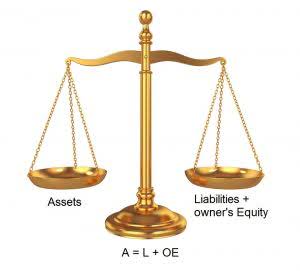
Understanding this calculation HOA Accounting is key to grasping a business’s core financial structure. Retained earnings represent the cumulative net income a company has generated, less any dividends it has paid out to shareholders. Each period, the net income or loss from the income statement is added to or subtracted from the beginning retained earnings balance. In this formula, the equity of the shareholders is the difference between the total assets and the total liabilities.

Stock Dividends
Treasury stocks are repurchased shares of the company that are held for potential resale to investors. It is the difference between shares offered for subscription and outstanding shares of a company. Let us take the annual report of Apple Inc. for the period ended on September 29, 2018. As per the publicly released financial data, the following information is available. Note that the treasury stock line item is negative as a “contra-equity” account, meaning it carries a debit balance and reduces the net amount of equity held. From the viewpoint of shareholders, treasury stock is a discretionary decision made by management to indirectly compensate equity holders.
How to Calculate Average Shareholder Equity
- Let us take the annual report of Apple Inc. for the period ended on September 29, 2018.
- Non-current liabilities, also known as long-term liabilities, are financial obligations that are not expected to be settled within one year.
- Next, the “Retained Earnings” are the accumulated net profits (i.e. the “bottom line”) that the company holds onto as opposed to paying dividends to shareholders.
- Stockholders’ equity is the residual claim on the assets after all liabilities have been settled.
- This action reduces the amount of outstanding shares and represents a return of capital to the shareholders whose shares are bought back.
This sum represents the total claims against a company’s assets from both external creditors and internal owners. This averaged figure is important in financial analysis, especially when calculating the Return on Equity (ROE) ratio. ROE measures how much profit a company generates for each dollar of equity invested by its shareholders. Total equity represents the cornerstone of a company’s financial standing, reflecting the owners’ residual interest in its assets after deducting liabilities. In simpler terms, it is what remains for the shareholders after all debts and liabilities are accounted for.
Formula
For calculating an average, obtain the total stockholders’ equity at two distinct points in time. This generally means finding the figures at the beginning and end of a period, such as year-end totals from two consecutive balance sheets. Stockholders’ equity is composed of several accounts that collectively show the total value attributable to the company’s owners. One primary component is common stock, which represents the par value of shares issued to investors. These shares signify ownership and typically come with voting rights and a claim on the company’s earnings and assets. Equity is also known as shareholder’s equity and is easily available as a line item in the balance sheet.
- These earnings are reinvested in the business to expand operations, purchase new equipment, or pay off debt.
- When a company buys back its shares, it reduces the total number of outstanding shares, and treasury stock is recorded as a contra-equity account, which decreases overall stockholders’ equity.
- While the asset value is normally more than the company’s liabilities, there can be instances where the figures reflect an opposite scenario.
- For instance, a company with a large average total equity relative to its market capitalization may be undervalued, suggesting a potential investment opportunity.
- The company’s stockholders are usually interested in the stockholder’s equity, and they are concerned about the company’s earnings.
Uncover how a key financial ratio reveals a company’s reliance on debt versus equity. Understand its impact on financial stability and risk for informed decisions. The interpretation of whether a company’s total equity is “high” or “low” depends on several factors, including industry norms, the company’s historical performance, and its ability to generate returns. So from the above-given information, we will calculate the total equity using the equations mentioned above. With this information, we can work our https://braingaming.eu/2023/04/10/manufacturing-costs-types-and-cost-calculation/ way backward to figure out beginning stockholders’ equity. As a rule of thumb, if one of these changes would increase capital, we’ll subtract it from the period-end stockholders’ equity.

Example of High Total Equity:
This can be particularly appealing for value investors who look for opportunities to buy stocks at prices that are below their intrinsic values, as suggested by strong equity positions. Following the asset section, liabilities are presented, detailing all amounts owed to external parties. Finally, the stockholders’ equity section outlines the owners’ residual claim on the company’s assets.
- Notice that it is reported separately from retained earnings and separately from paid-in capital.
- The certificate would indicate the type of stock (common, preferred), any restrictions pertaining to the sale of the stock, the number of shares, the par value, etc.
- In contrast, a sole proprietorship can be started in minutes, sometimes with nothing more than opening a business checking account.
- In other words, the Shareholder’s equity formula finds the net value of a business or the amount that the shareholders can claim if the company’s assets are liquidated, and its debts are repaid.
- “This immediate challenge underscores a broader uncertainty facing millions of households, with current forecasts suggesting a sharp drop in bills is unlikely in the near term.”
The date that determines which stockholders are how to find total stockholders equity entitled to receive a corporation’s declared dividend. Insurance Expense, Wages Expense, Advertising Expense, Interest Expense are expenses matched with the period of time in the heading of the income statement. Under the accrual basis of accounting, the matching is NOT based on the date that the expenses are paid. A stock split, such as a 2-for-1, means that every stockholder will have twice as many shares as was held previously. Accordingly, the market price per share after the split should be one-half of the market price existing prior to the stock split. The main reason for a stock split is to reduce the market price per share of stock.